ELECTRA
La fille sous l’armure bleue
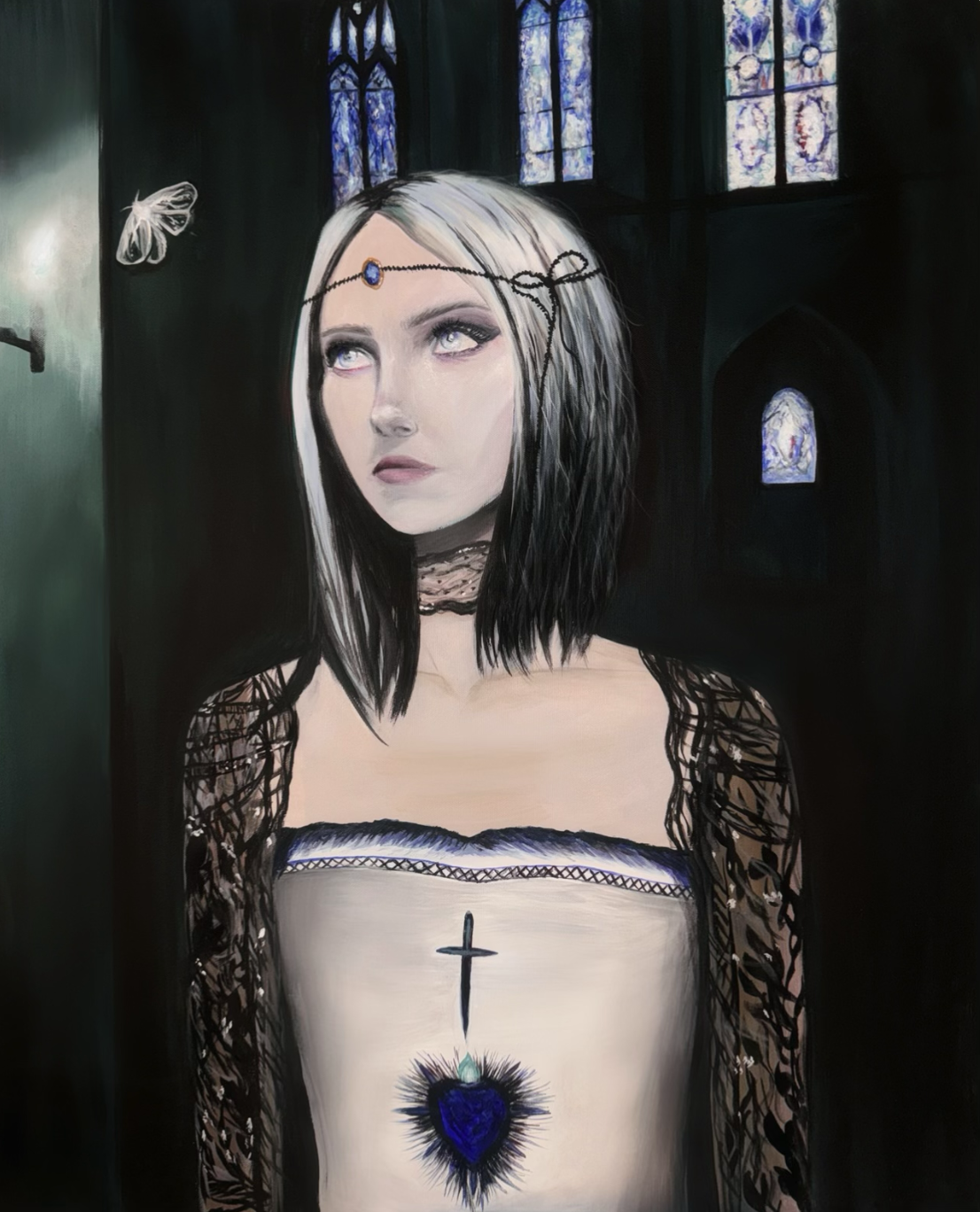
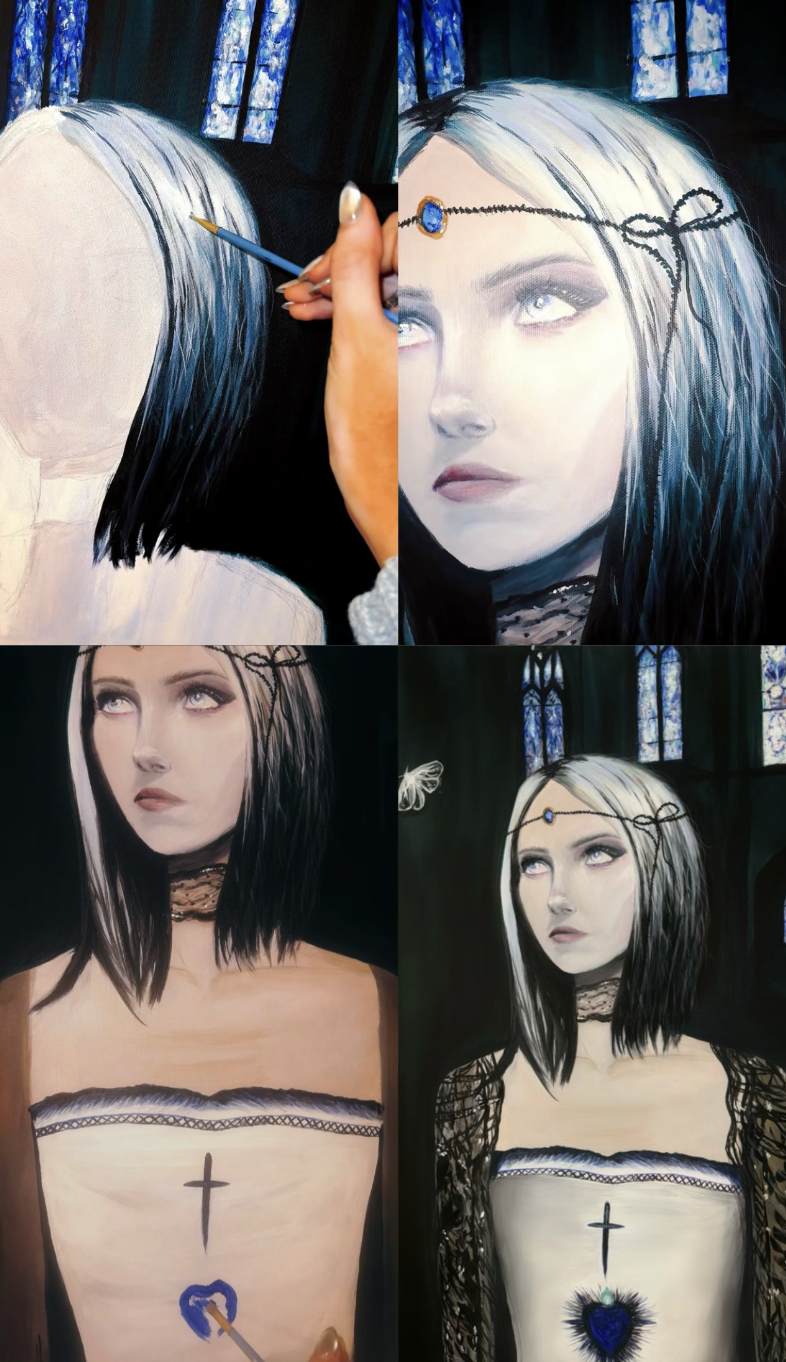
This work exists as both a painting and a sculpture, conceived together as a single figure and narrative. The portrait is my largest work to date and marks a shift in how I approach the relationship between figure and environment. The girl exists inside a cathedral that sits somewhere between the living world and a space of my own creation. Electra is a memorial figure.
She is built around the tension of being looked at but not understood. She is desired, judged, and mythologized from the outside, while something essential remains inaccessible.
The portrait acknowledges mortality rather than resisting it, treating the figure as if she has already crossed a threshold or become aware of her own impermanence. Her skin is rendered in deliberately cool tones, giving her a stillness that borders on lifelessness. She is idealized not in pursuit of beauty, but in the way memorials are idealized, suspended between reverence and loss.
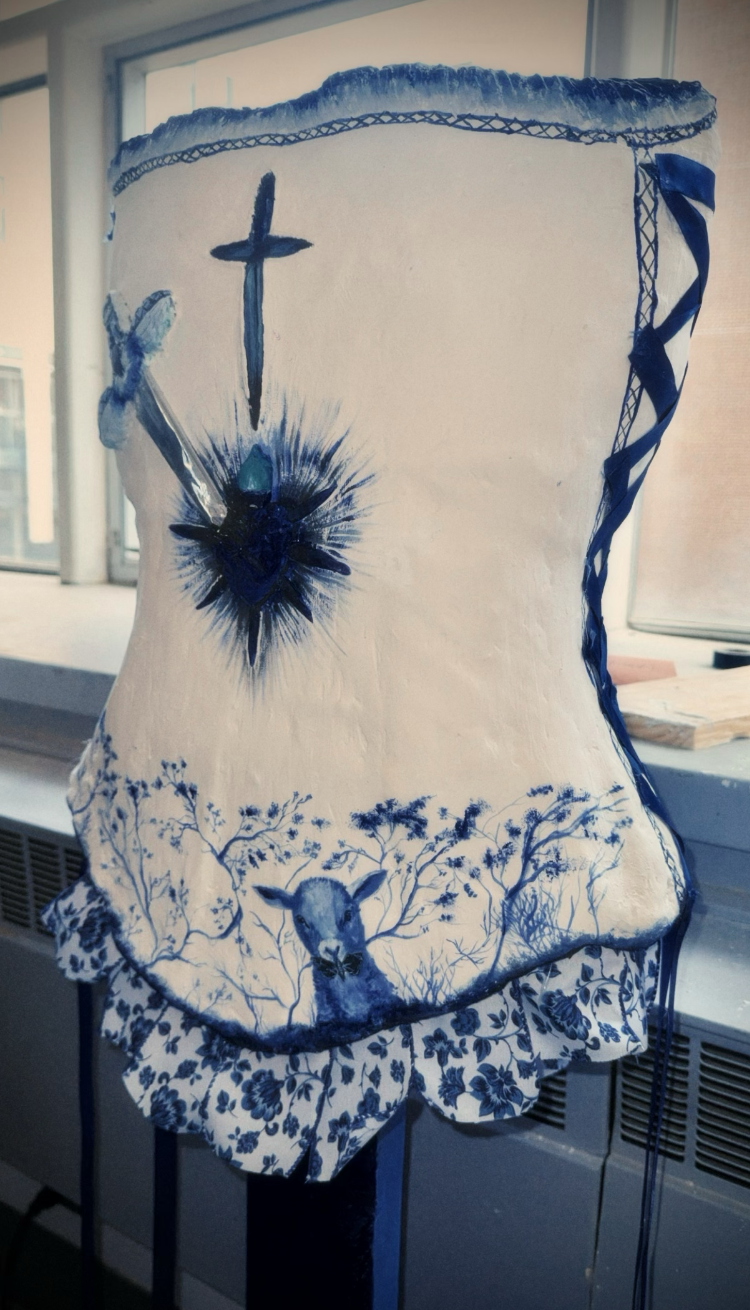
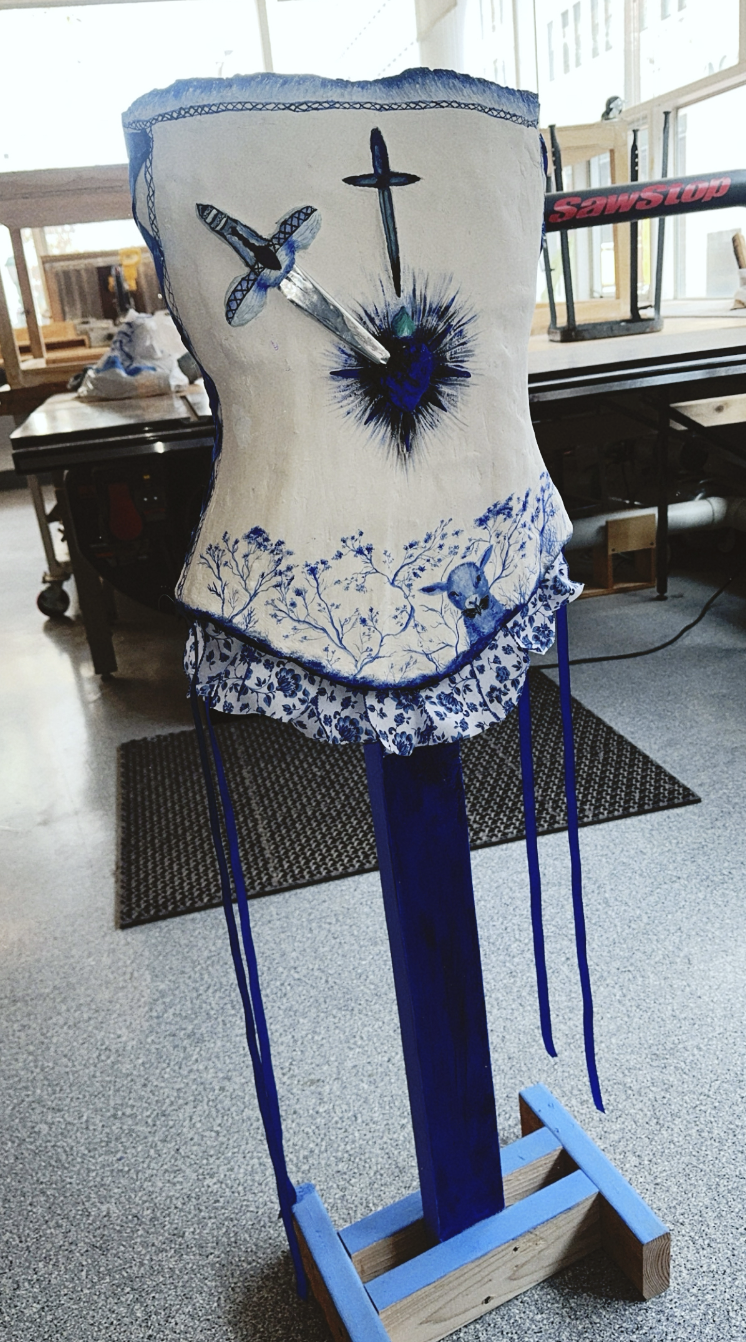
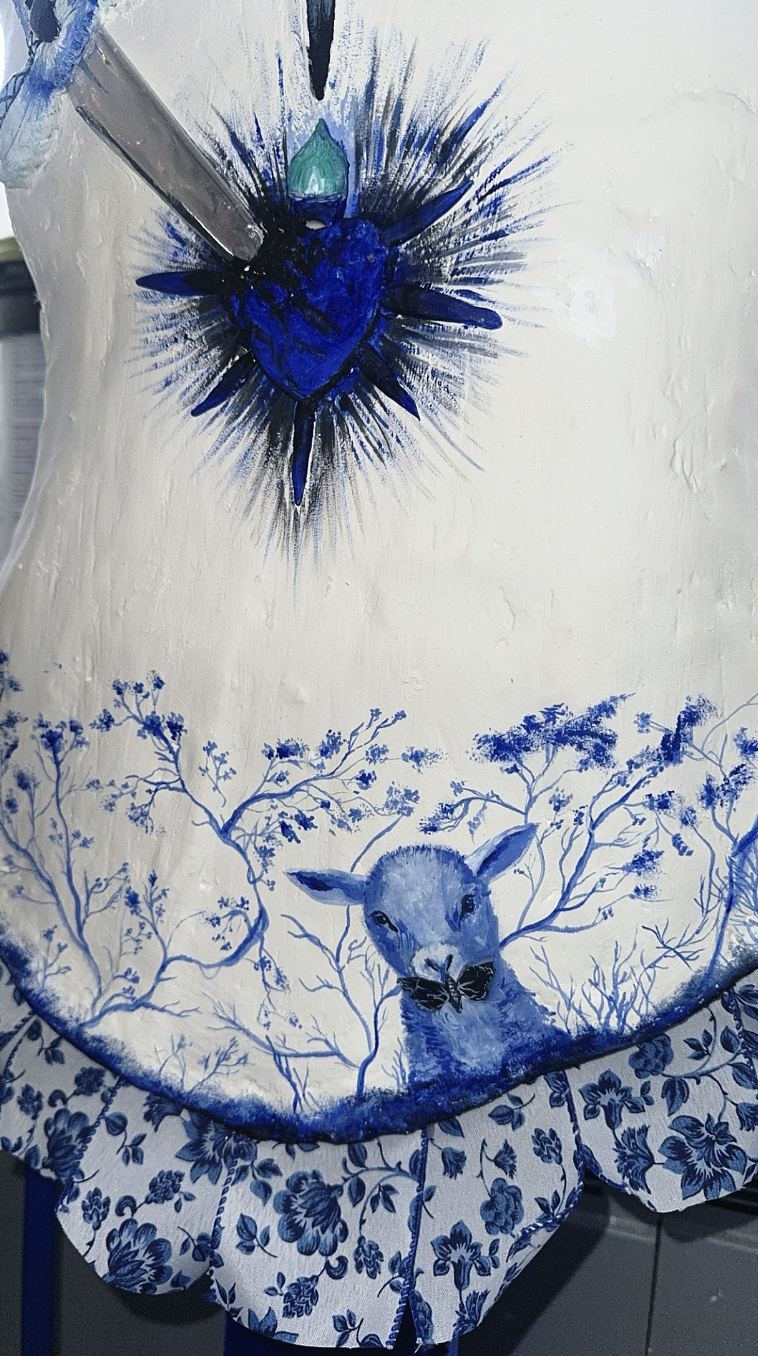
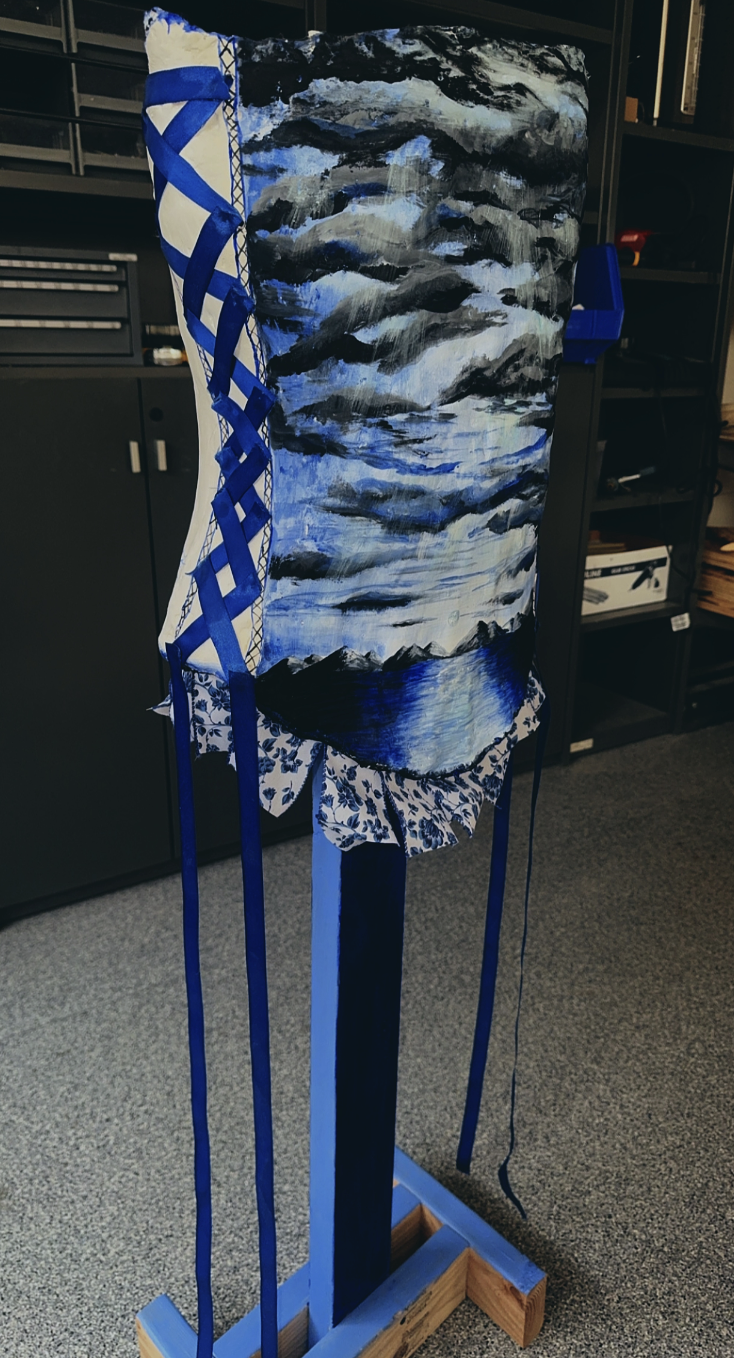
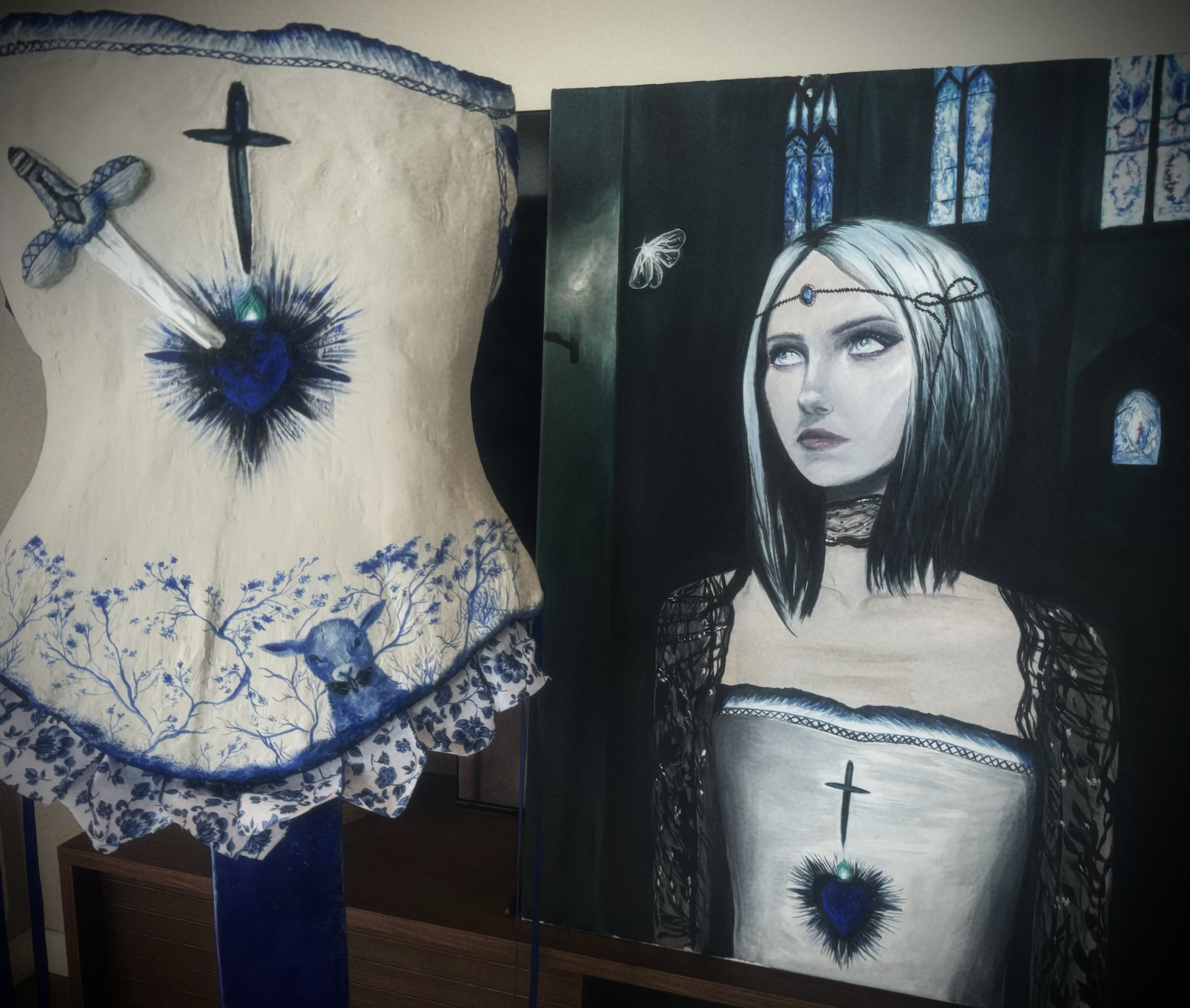
She wears an armor corset that exists as a sculptural object outside of the painting. At its center is a sacred heart. In the sculpture, the heart is pierced by a dagger. In the painting, it remains intact. The cross above it subtly echoes the blade’s form, suggesting faith, fate, or inevitability. Together, the works hold two moments at once: before and after sacrifice.
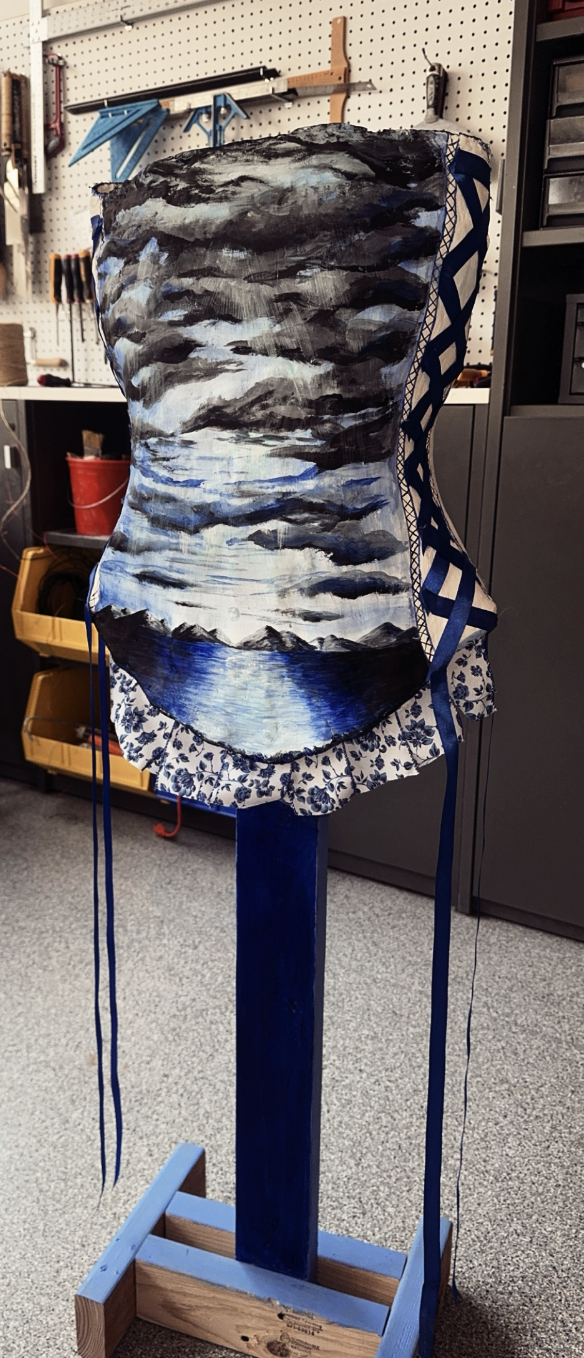
The corset draws from my study of historical armature in the Arms and Armor exhibition at The Met, as well as Victorian corsetry. I was interested in taking the corset, an object traditionally associated with restriction and control, and reworking it as armor. Something worn not to confine the body, but to protect it. In this context, the corset becomes her clothing for battle rather than a symbol of limitation. The armor exists as what remains of her, cast and fixed, more relic than garment.
Embedded on the corset is a small lamb with a moth placed over its mouth. The lamb functions as a marker of her innocence, something withheld from the portrait but preserved within the armor. The moth connects the object to the vision she already carries.
Her headpiece references Victorian portraiture, while the corset’s surface evokes fine china, allowing fragility and strength to exist within the same form. The figure appears to look upward toward something eternal, yet her attention is drawn to a small, ghostly moth hovering near the light. The moth reads as either a prophecy or a hallucination, left intentionally ambiguous, blurring the boundary between inner vision and external reality.
While the figure is a stylized self-portrait, she is also a character of my own creation. The cathedral functions as an extension of her emotional state: cold, stoic, imposing, and unattainable.
Together, the painting and sculpture reflect on sacrifice, awareness, and the coexistence of beauty and fragility. She is not depicted at the moment of sacrifice, but in the knowledge that it will come.
ELECTRA’S ARMOR